
ಕೃಷಿ ಖಾತೆ
Krishi Khata · Farm Khata Book
The paper khata, on a phone. Income, expenses and the daily-wage labour that dominates both — written down in Kannada, in the field, with no signal.
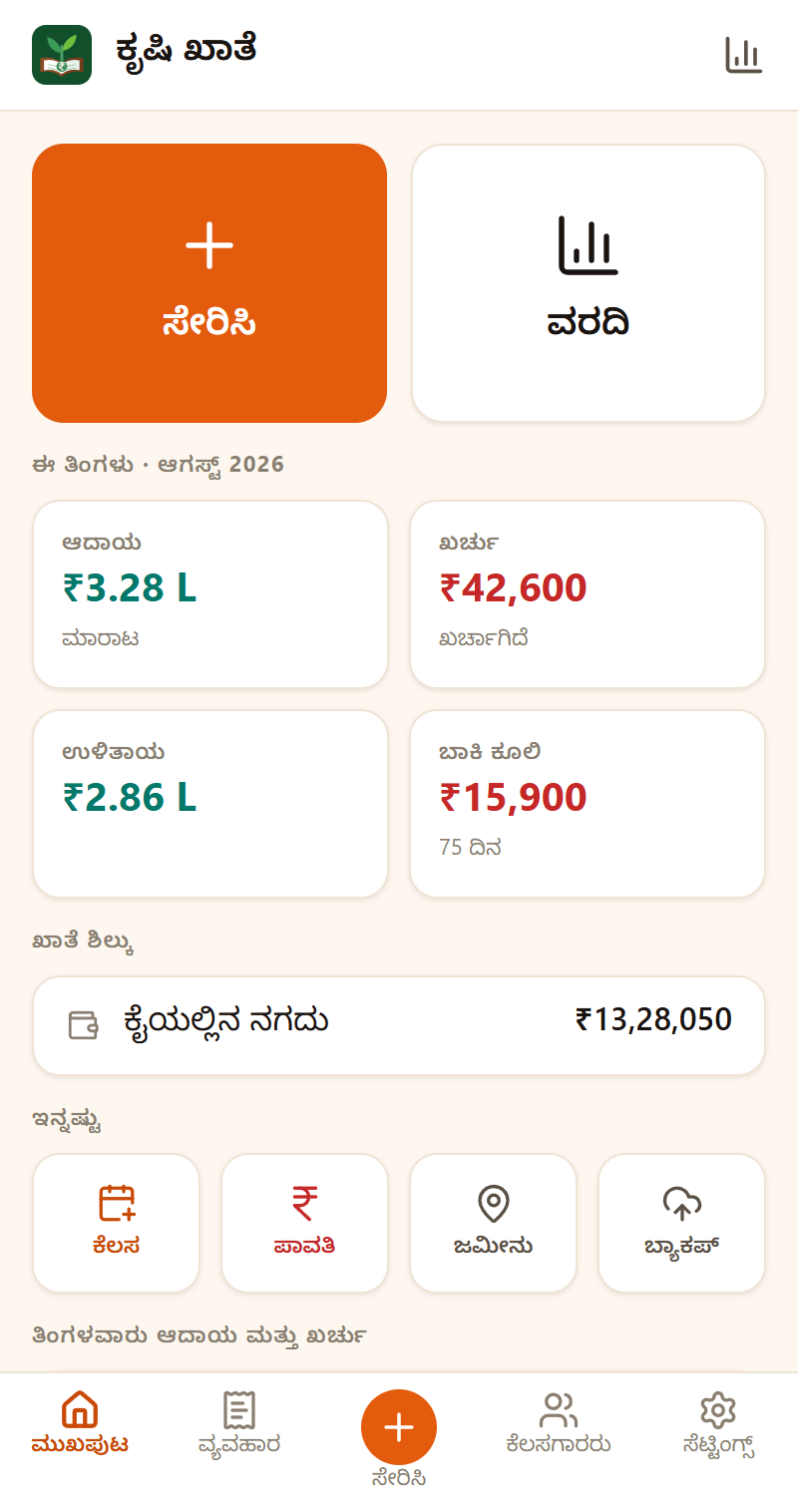
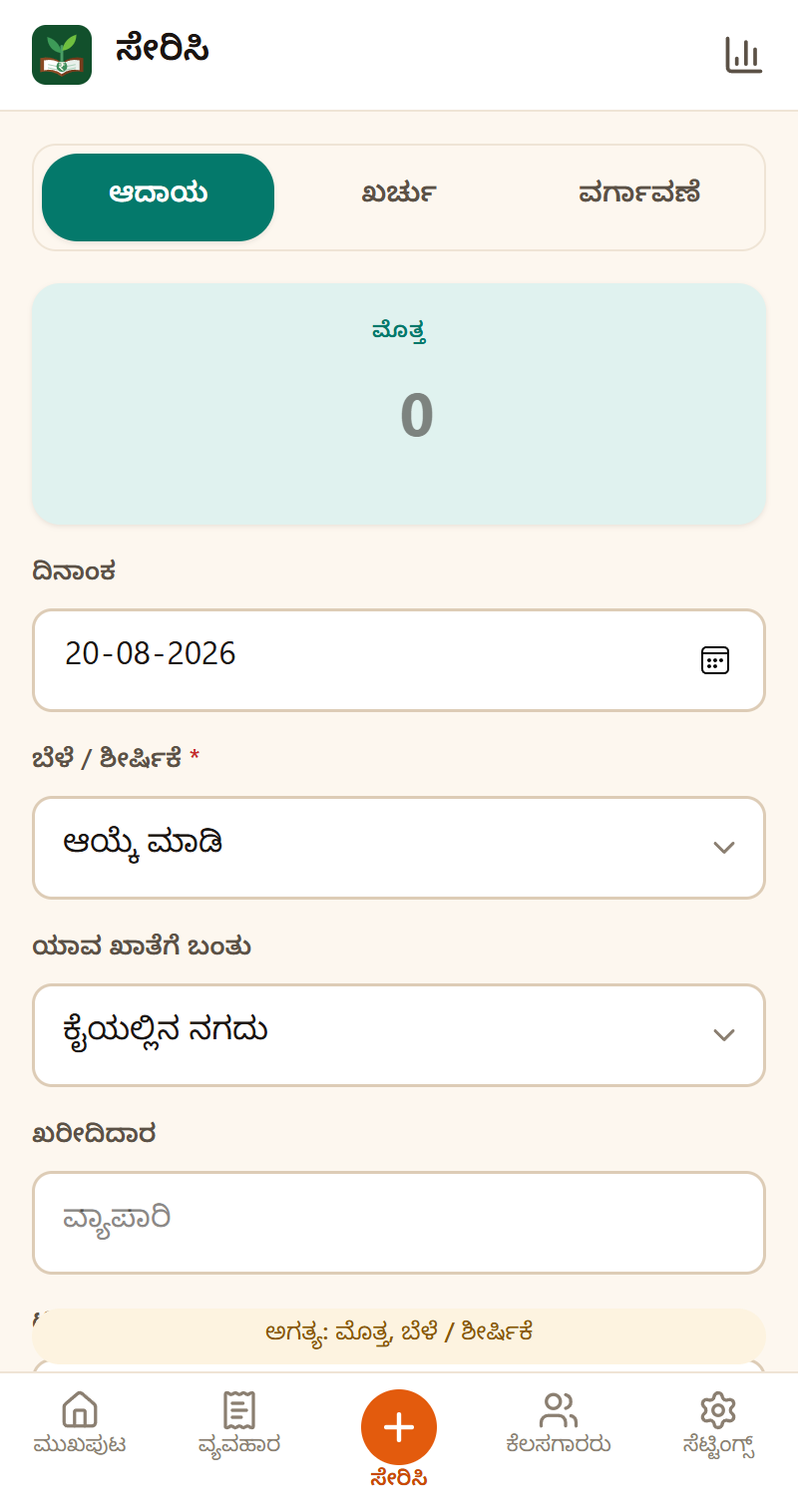
Money in
250 kg of banana at ₹42, or 12 bottles of honey at ₹450. Each crop carries its own units and its own varieties, so the entry stays two taps long.
Money out
Not "₹8,000 on banana" but crop, kind of spend, and exactly what work. The car and the house go in the same book, because a farmer has one wallet.
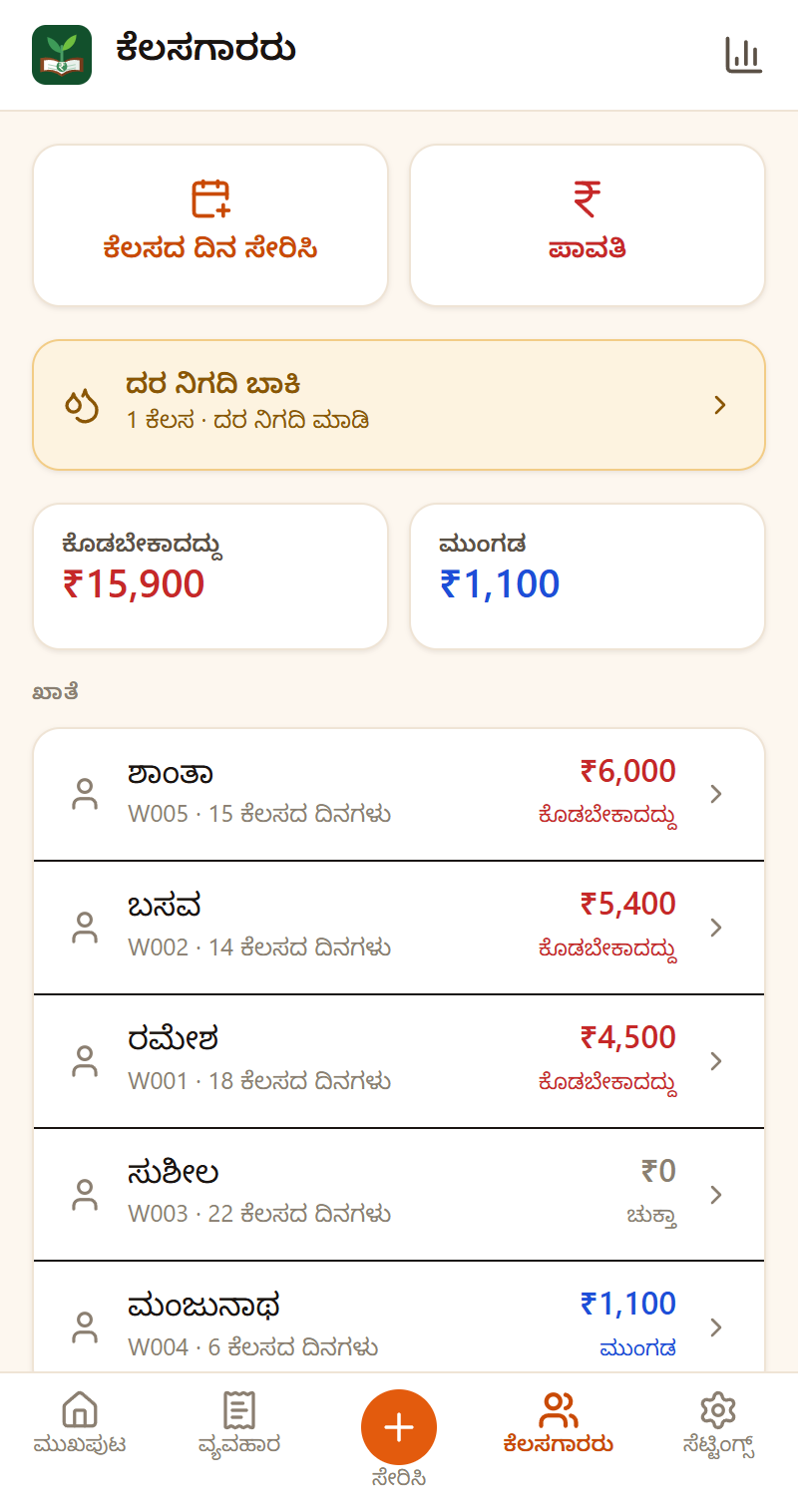
Labour
Tap the days somebody worked on a month calendar. Day rate, by the hour, per litre, a lump sum, or a monthly salary — each paid the way it is really paid.
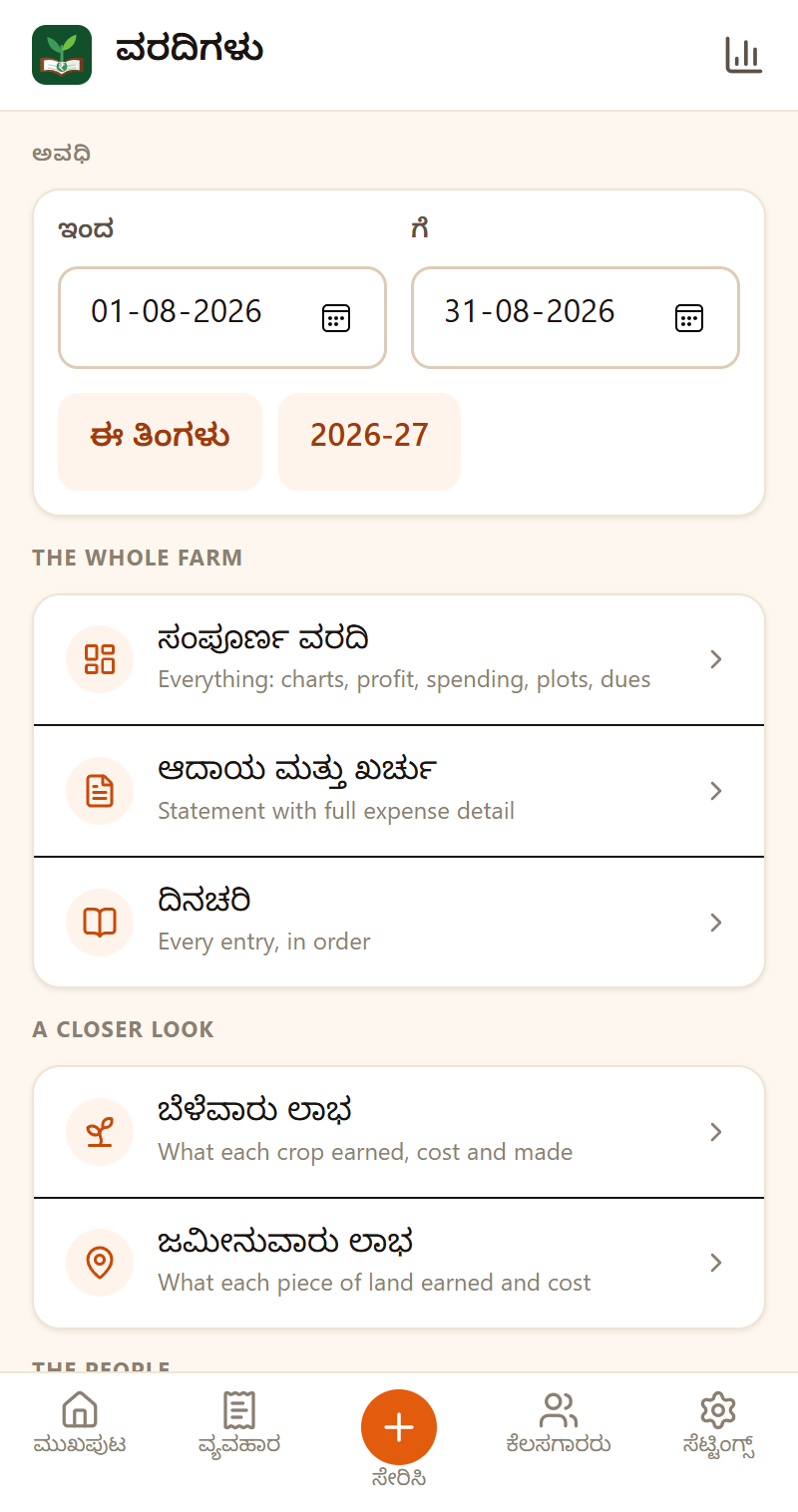
Statements
A worker's full record as a PDF in Kannada: the days they came, what they earned, what they took, what is left. Handed over, not argued over.
Why it is built this way
It works with the SIM out. Everything is written to the phone first. A farmer standing in a field with no signal records six days of work, walks back into range, and the backup catches up on its own. Nothing ever waits on a network.
There is no server, and no account on anybody’s system. The ledger lives on the phone. If you switch on Google Drive backup it goes from your phone to your own Drive, in a hidden folder this app alone can reach — never through me, and never anywhere I can read it. See the privacy policy.
Kannada first, English second. Not a translation layer bolted on afterwards: every crop, worker and account carries both names, and the printed statements do too, because the document gets handed to somebody who may read the other one.
Money is counted in paise, dates are plain local dates. The arithmetic that decides what a farmer owes somebody standing in front of them is held down by a suite of assertions that must pass before any build reaches a phone.
Work, the way it is actually paid
A day rate is only one of the ways a farm pays for work, and an app that knows only day rates quietly records the rest wrongly.
| How it is paid | What that looks like |
|---|---|
| By the day | A rate, times the days they came. Half days are one more tap. |
| By the hour | A tractor and its driver, at a rate agreed beforehand. |
| Per unit | Spraying, per litre — and the price is settled after the job. |
| Lump sum | Coconut plucking: one figure agreed for the whole job. |
| Monthly | A fixed worker, posted once a month. |
Work and money are kept apart on purpose. Recording a day of work does not create an expense; paying somebody does. That is what lets the app tell you what is still owed, which a book that only records payments never can.
Who it is for
Small and marginal farmers in Uttara Kannada, Karnataka, growing arecanut, banana, pepper and coconut, who hire daily-wage workers and keep their accounts in a paper khata. One Android phone, patchy network, and no appetite for signing up to anything.
Free, with no advertising, no subscription and no data collection of any kind.